If you run a field service business, you have likely noticed the gap between what should happen in the field and what actually happens.
- A technician says they were on-site for an hour. The customer says they only saw them for twenty minutes.
- A customer calls asking where their technician is, and nobody really knows.
- Fuel expenses keep climbing, but vehicle usage hasn't changed.
These situations aren't unusual. In fact, they're common challenges for plumbing, HVAC, electrical, landscaping, pest control, and other service, sales, or delivery businesses that rely on mobile employees.
The problem isn't your people. The problem is visibility.
When your workforce spends most of its day on the road, you need a simple way to know what's happening without making constant phone calls or chasing paperwork.
That's where Location Services and workforce visibility tools come in. Today’s technology allows you to manage a mobile workforce the same way you manage your stationary workforce. By knowing where they are and what they are doing. This isn’t tracking, it’s visibility.
Here are five signs it's time to make the move.
1. You're Spending Too Much Time Resolving Customer Disputes
Nothing is more frustrating than getting caught in the middle of a disagreement between a customer and a technician. The customer says the technician never arrived. The technician says they were there.
Now you're forced to decide who's right.
Without reliable records, it's often your word against theirs.
Location Services eliminate the guesswork by automatically documenting arrival times, departure times, location, and time spent on-site. Instead of relying on handwritten notes or memory, you have an accurate record of what actually happened.
That means faster dispute resolution, better customer conversations, and more importantly, protection for your employees when they've done their job correctly.
2. Jobs Are Frequently Running Behind Schedule
One delayed appointment can throw off an entire day.
A technician gets stuck in traffic, spends longer than expected at a job site, or encounters an unexpected issue. Before you know it, every customer scheduled after lunch is impacted.
Without real-time visibility, you don't discover the problem until customers start calling.
Location Services give dispatchers and managers real-time insight into field activity. More importantly, they allow you to communicate proactively, adjust schedules, and reassign work when necessary.
Although customers are often understanding about delays if they know about them ahead of time what frustrates them is being left in the dark.
3. You Don't Always Know Where Your Vehicles Are
Most business owners don't like to admit it, but many have no clear picture of where their vehicles are between jobs. That uncertainty can lead to excessive idle time, inefficient routing, unauthorized vehicle use, and wasted fuel.
Even if you trust your team—and you should—having visibility into vehicle activity helps identify opportunities for improvement.
Location Services provide a complete history of vehicle movement, helping you understand how vehicles are being used and where operational efficiencies can be gained.
Important point: The goal isn't surveillance. The goal is operational awareness.
4. Fuel Costs Keep Increasing
Fuel is one of the largest operating expenses for most field service companies. When fuel costs rise faster than revenue, it's usually a sign that something else is happening behind the scenes. In today’s environment, it may seem like the result of rapidly rising prices. If so, understanding and managing fuel is even more important.
Excessive idling, poor routing, unnecessary trips, and delayed maintenance all contribute to higher fuel consumption. You need easy to understand data to determine the root cause of inefficient fuel use. Workforce visibility tools and Location Services help uncover inefficiencies that are often invisible in day-to-day operations. Once you know where the waste is occurring, you can take action to reduce it.
For many businesses, even small improvements in routing and vehicle utilization can produce meaningful savings. If you save enough dollars it becomes real money.
5. You Can't Easily Prove a Job Was Completed
Here is the final point. Most work vehicle exist to further the business of the company and supply a service to the customer. Today's customers expect accountability.
Many service contracts and Service Level Agreements (SLAs) now require proof that work was completed on time and according to agreed standards. If your documentation process relies on paper forms, signatures, or manual time entries, you're creating unnecessary risk including:
- Lost records
- Forgotten details
- Inability to provide objective proof
Location Services automatically create a digital record showing when a technician arrived, how long they were on-site, and when they departed. Those records are securely stored and available whenever questions arise.
Instead of debating what happened, you can simply review the facts.
The Bottom Line
Field service businesses are being asked todo more than ever before. Customers want faster service, better communication, and greater accountability. At the same time, owners are trying to control costs and improve profitability.
This isn't about tracking people.
It's about creating visibility into your operations so you can run a more efficient business, deliver a better customer experience, and make smarter decisions. The most successful field service companies don't rely on guesswork. They rely on timely, accurate information.
If any of these five challenges sound familiar, it may be time to take a closer look at how Location Services can help improve your operation.
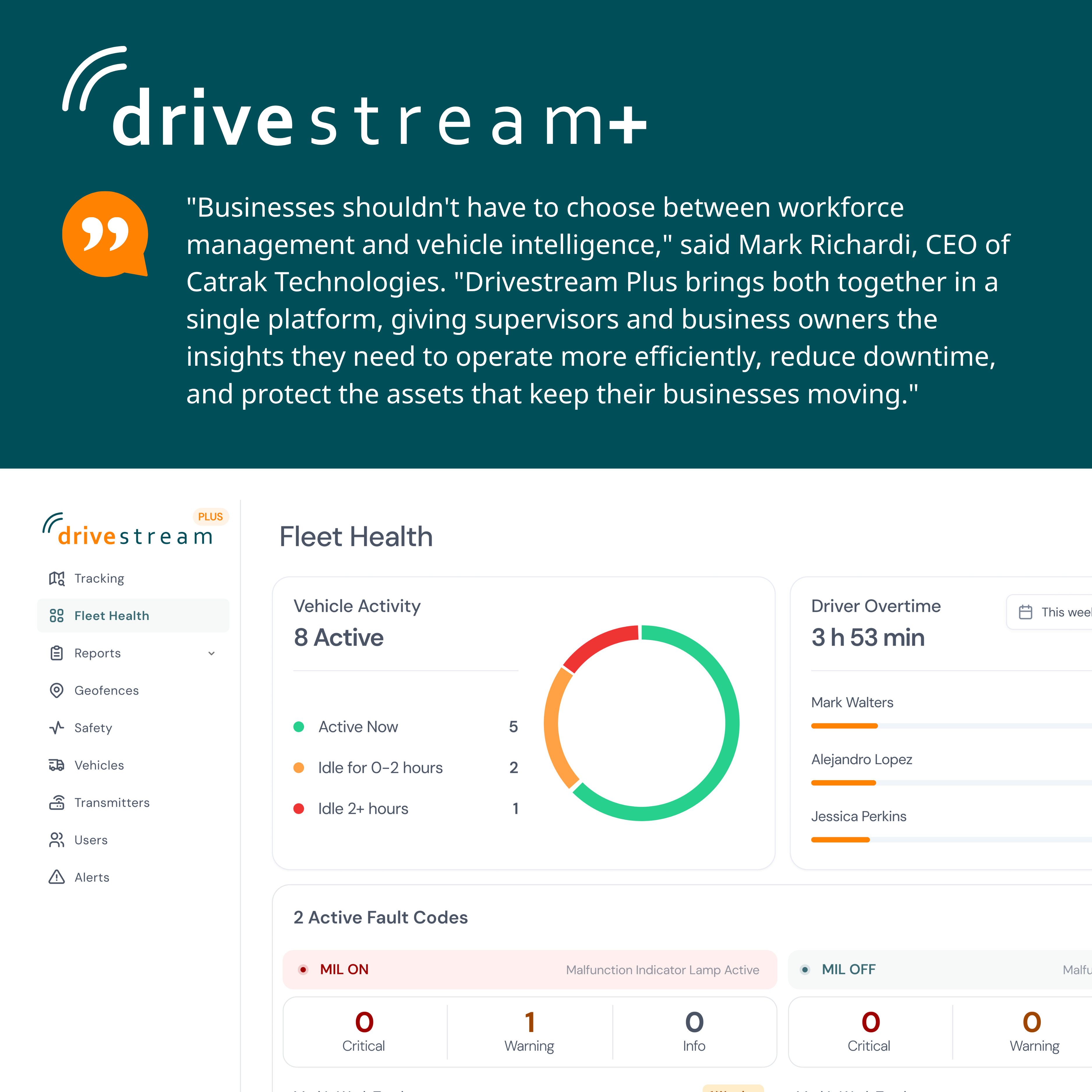
With Drivestream, you can gain real-time workforce visibility, improve accountability, and enhance customer service—all without adding expensive hardware or complicated systems.
Better visibility leads to better decisions. Better decisions lead to better business results.
More Insights & Tips